
Great Yarmouth Rows
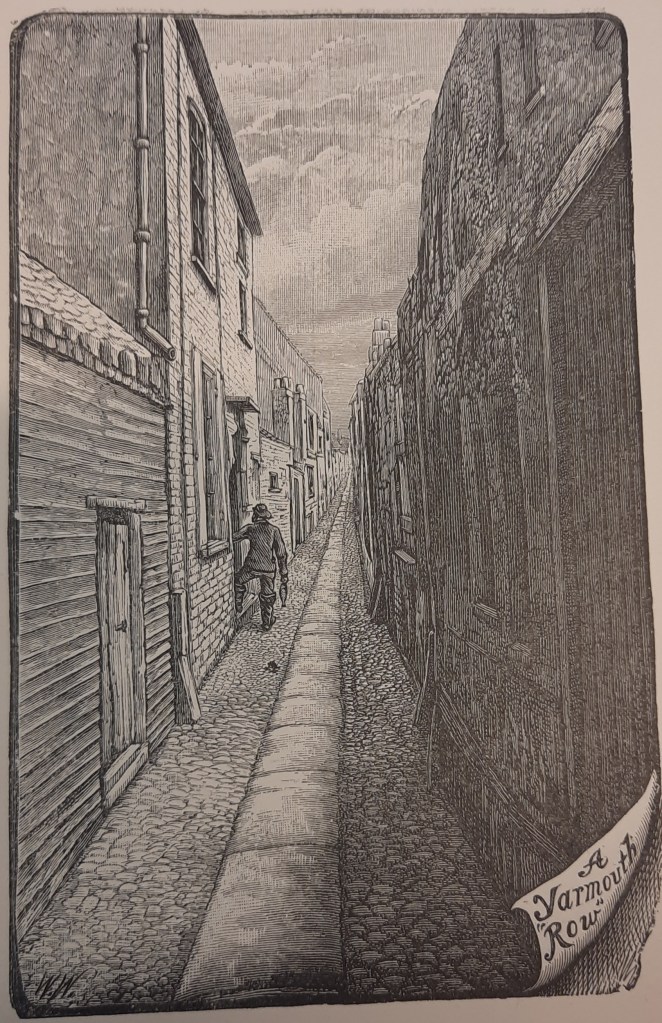
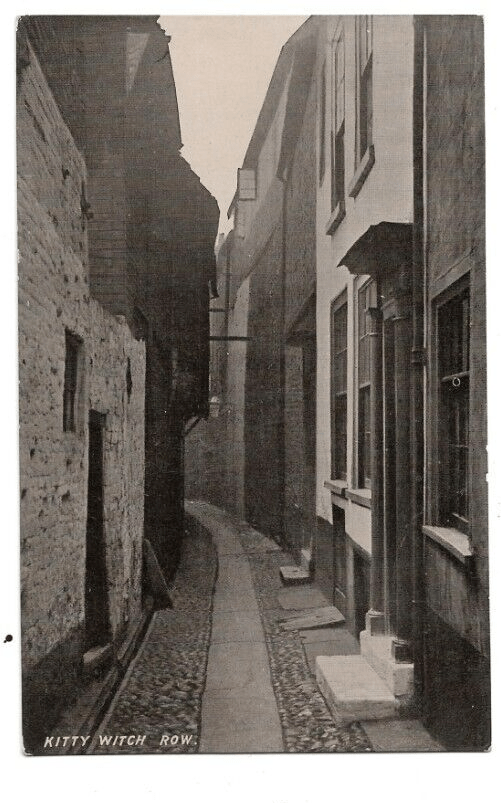
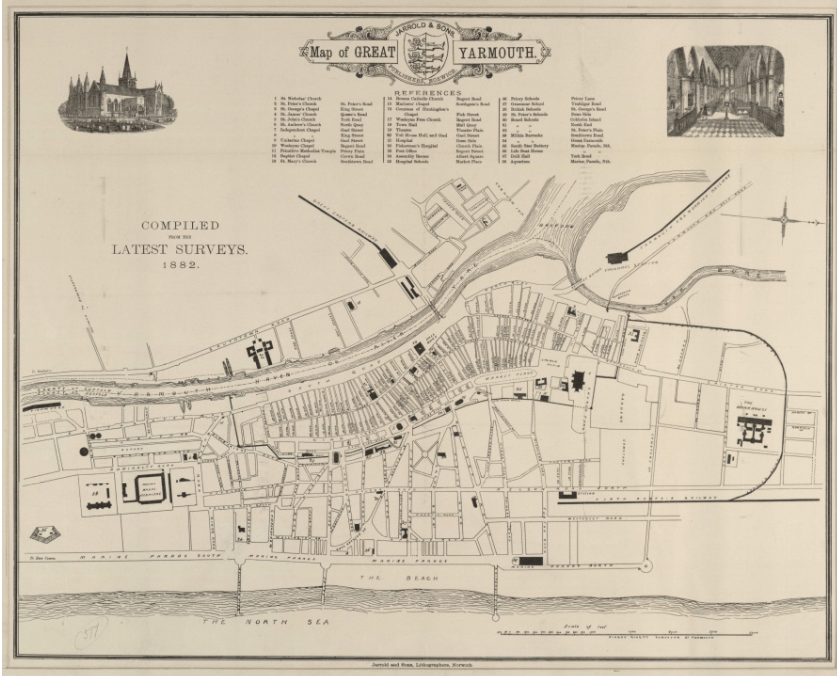
The first fishing settlement in Great Yarmouth dates back to the 11th century. First mentioned in 1198, the ‘Rows‘ were very narrow cobbled alleyways running between the South Quay and the coastline. Measuring approximately 90-150 cm wide, in Mediaeval times there were as many as 145 rows. Since a law prevented from building outside the city walls until the 19th century, space limitation is thought to be the reason for such narrow, cramped streets. It has also been suggested that such a street layout could have been modelled on similar examples in Scandinavia and Scotland. The city was heavily bombed during WWII and the few alleys that survived were subsequently obliterated by modern redevelopment. In many ways, the Rows are synonymous with the town’s history. Their disappearance is a reminder of wartime destruction as well as unscrupulous planning.
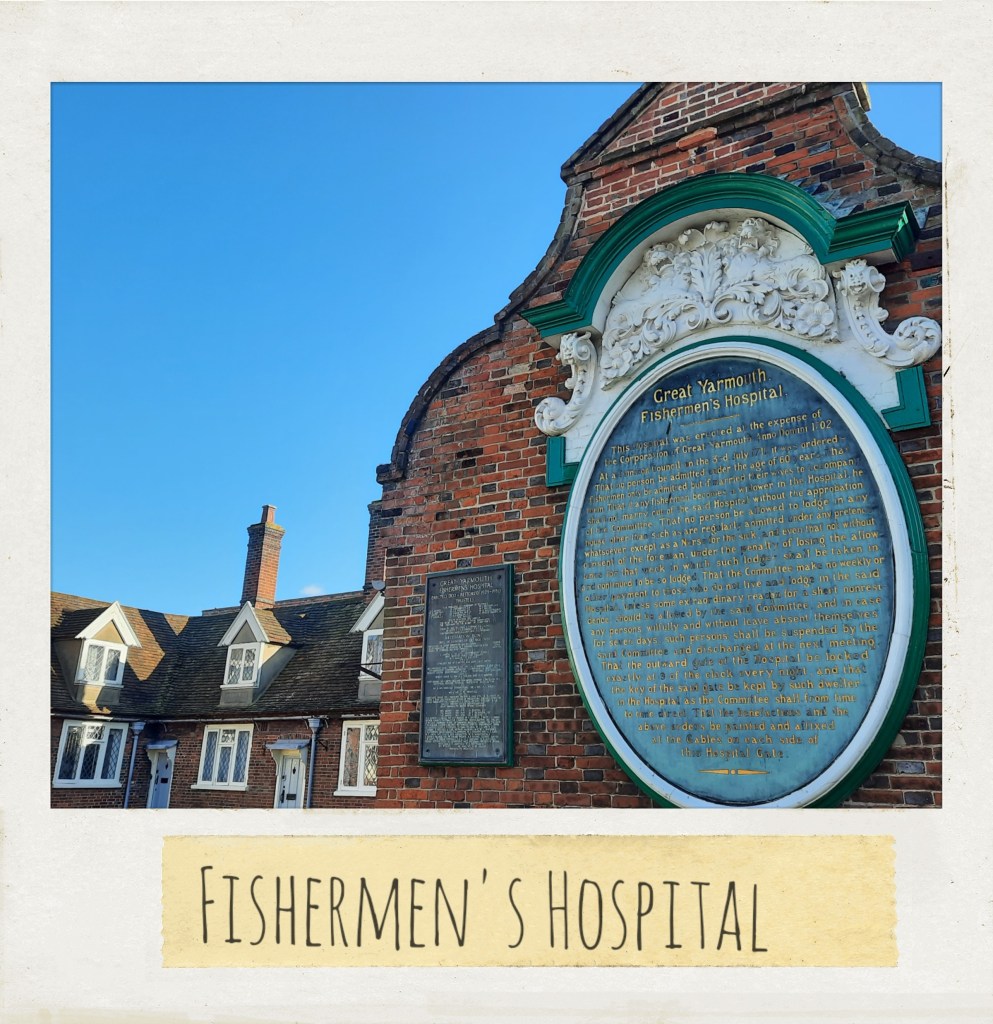

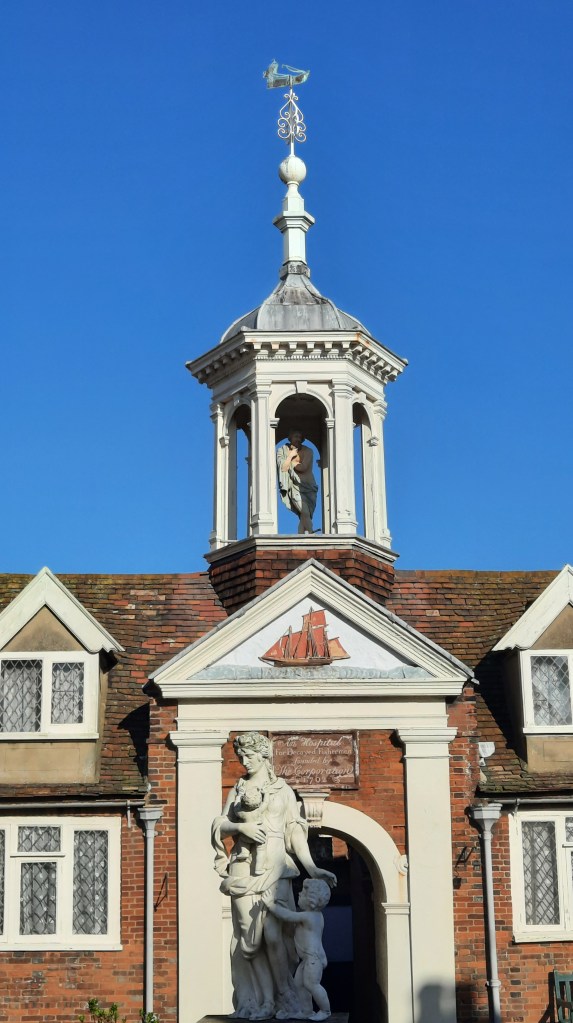
Fishermen’s Hospital (1702)
In 1702, the Corporation of Great Yarmouth founded this charitable institution to house ‘decayed fishermen’. The fishermen and their wives were accommodated in 20 terraced cottages arranged around a courtyard with a painted lead statue of Charity at its centre. In the hexagonal lantern at the back is a painted timber statue of St Peter (i.e., the saint notably associated with fishing). The pediment features a painted relief with a sailing ship proceeding backwards.
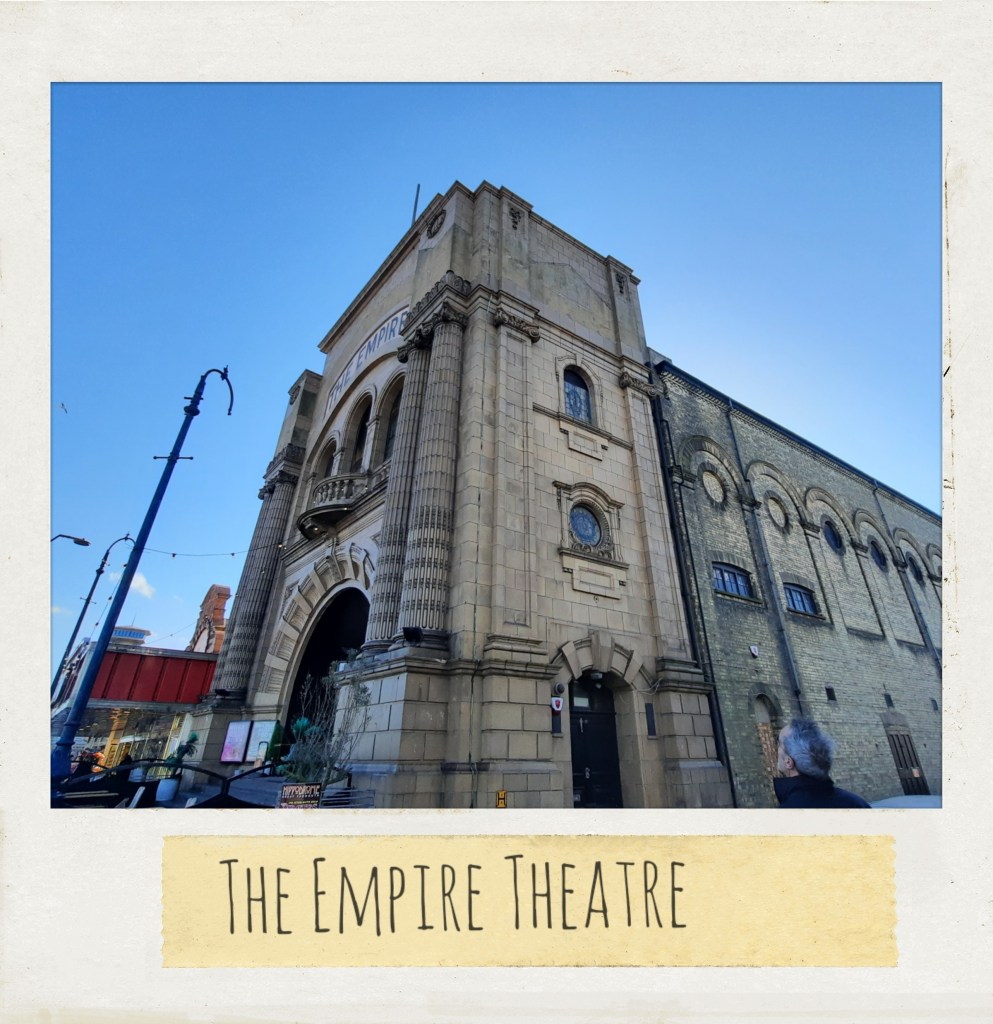
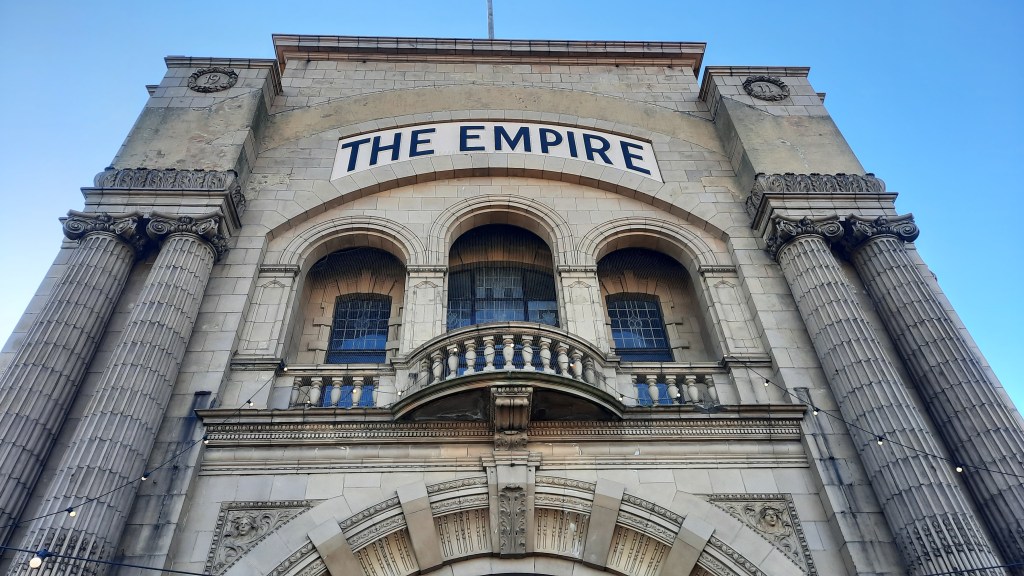
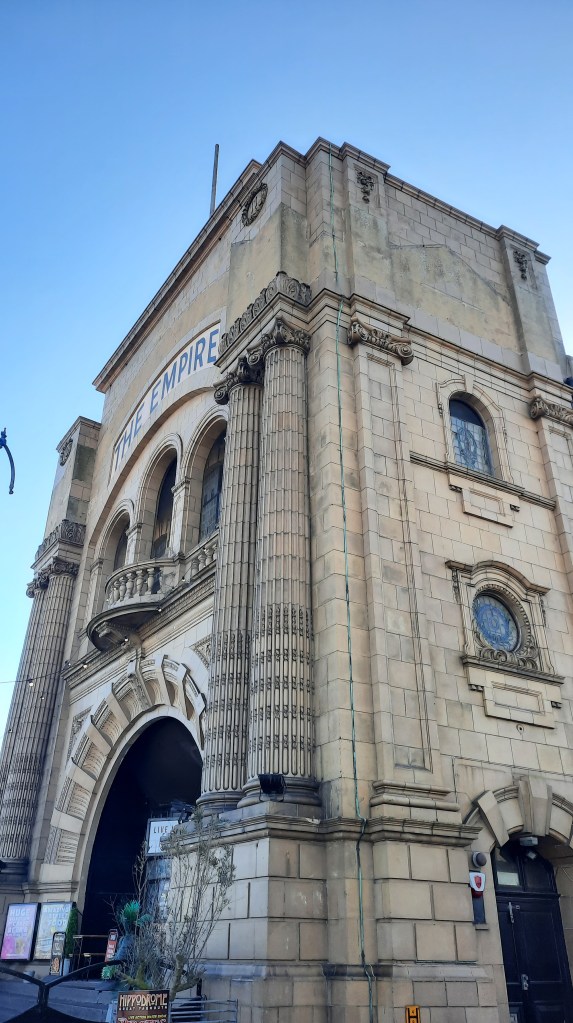
The Empire Theatre (1911)
The Empire Theatre was designed by the architect Arthur S. Hewitt (active between 1875 and 1946) for E.V. Barr Ltd. who had previously commissioned him the Gem Theatre in 1908. To the Neo-Baroque style of the Gem, Hewitt preferred a more linear façade in the Renaissance style for the Empire. Flanked by two pairs of giant fluted Ionic columns, the arched entrance is surmounted by a loggia with a three-light window. The reliefs were made using Burmantofts vitreous terra cotta from Leeds Fireclay Company. The side of the building vividly recalls the classic geometry of Alberti’s Tempio Malatestiano. The severe and simplified attic, on the other hand, is possibly a nod to the Viennese Secession. Wonderfully eclectic.
 period eye